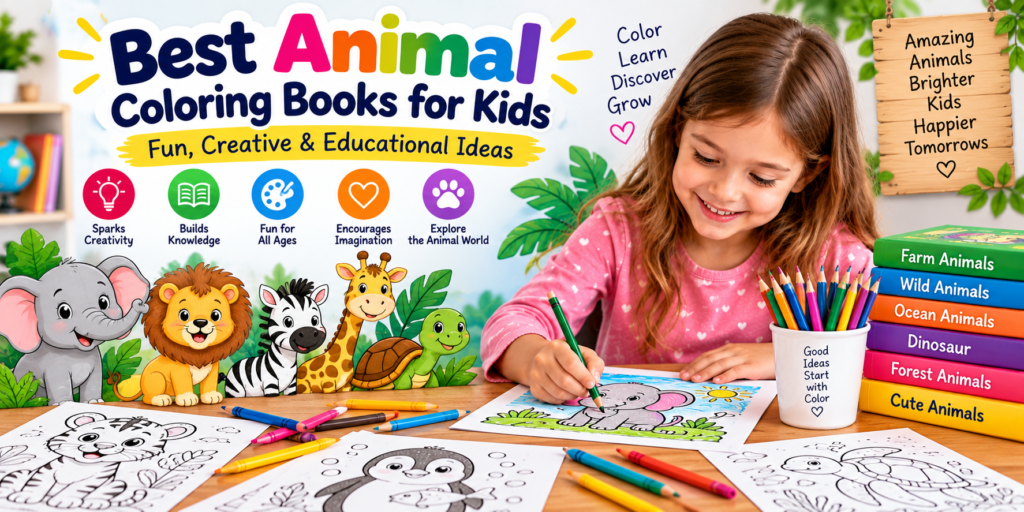
Animals are one of the most popular subjects in children’s books, activities, and educational resources. From playful puppies and cute kittens to wild lions, dinosaurs, ocean creatures, and colorful birds, animals naturally capture children’s attention.
That makes animal coloring books an excellent choice for children who enjoy creative activities and want to explore the world around them.
An animal coloring book can be used simply for fun, but it can also become a starting point for learning. While coloring a page, children can learn animal names, recognize different species, talk about habitats, discover what animals eat, and create imaginative stories.
For parents, teachers, and caregivers, the best animal coloring books combine age-appropriate illustrations, interesting themes, and plenty of opportunities for creativity.
In this guide, we’ll explore different types of animal coloring books, how to choose the right one for different ages, educational ideas, printable options, and fun ways to make animal coloring time more engaging.
Quick Answer: What Are the Best Animal Coloring Books for Kids?
The best animal coloring book depends on a child’s age and interests.
Popular options include:
- Farm animal coloring books
- Zoo animal coloring books
- Wild animal coloring books
- Cute animal coloring books
- Ocean animal coloring books
- Dinosaur coloring books
- Bird coloring books
- Insect and butterfly coloring books
- Forest animal coloring books
- Baby animal coloring books
For toddlers, choose books with large, simple illustrations. Preschoolers can enjoy recognizable animals with moderate detail, while older children may prefer detailed wildlife scenes, fantasy animals, dinosaurs, or ocean-life illustrations.
Why Do Kids Love Animal Coloring Books?
Animals are familiar enough for children to recognize while still being interesting and diverse.
A child might know what a dog looks like, but then discover completely different animals such as giraffes, penguins, elephants, whales, or kangaroos.
This variety gives animal coloring books for kids a natural advantage: every page can introduce something new.
Animal-themed coloring books can also support:
- Creativity
- Imagination
- Visual recognition
- Vocabulary development
- Observation
- Conversations about nature
- Interest in wildlife
- Independent creative play
The coloring activity itself remains the main focus, but the illustrations can create opportunities for additional learning.
Popular Types of Animal Coloring Books
Different animal themes appeal to different children. Choosing a specific category can make the coloring experience more exciting.
1. Cute Animal Coloring Books
Cute animal coloring books are ideal for children who enjoy friendly, playful illustrations.
Popular subjects include:
- Puppies
- Kittens
- Baby pandas
- Bunnies
- Hamsters
- Chicks
- Baby elephants
- Baby bears
These books often feature expressive faces, simple scenes, and adorable characters.
They can be especially appealing to younger children who are attracted to familiar and friendly animals.
2. Wild Animal Coloring Books
Wildlife coloring books introduce children to animals they may not encounter in everyday life.
Pages might feature:
- Lions
- Tigers
- Elephants
- Giraffes
- Zebras
- Rhinoceroses
- Monkeys
- Cheetahs
A wild animal coloring book can also inspire conversations about jungles, grasslands, forests, deserts, and other habitats.
3. Farm Animal Coloring Books
Farm animals are excellent subjects for younger children because many are easy to recognize.
Common examples include:
- Cows
- Horses
- Pigs
- Sheep
- Chickens
- Goats
- Ducks
- Donkeys
Parents can turn a simple farm animal coloring page into a vocabulary activity by asking children to name each animal and make its sound.
4. Ocean Animal Coloring Books
Children fascinated by the ocean may enjoy coloring:
- Dolphins
- Whales
- Sharks
- Sea turtles
- Octopuses
- Seahorses
- Crabs
- Jellyfish
Ocean coloring books can also introduce basic concepts about marine life and underwater environments.
5. Dinosaur Coloring Books
Dinosaur coloring books deserve their own category because dinosaurs have a particularly strong appeal among many children.
Popular dinosaurs include:
- Tyrannosaurus rex
- Triceratops
- Stegosaurus
- Brachiosaurus
- Velociraptor
- Pteranodon
Dinosaur coloring pages can combine creativity with simple discussions about prehistoric life, fossils, and different dinosaur characteristics.
6. Bird Coloring Books
Bird coloring books can feature everything from common backyard birds to exotic species.
Children can color:
- Parrots
- Owls
- Eagles
- Flamingos
- Peacocks
- Penguins
- Robins
- Hummingbirds
These pages can also encourage children to notice feathers, beaks, wings, nests, and other bird features.
7. Forest Animal Coloring Books
Forest-themed coloring books can introduce children to animals that live in woodland environments.
Examples include:
- Foxes
- Deer
- Bears
- Wolves
- Squirrels
- Raccoons
- Owls
- Hedgehogs
A forest scene can contain several animals, trees, leaves, mushrooms, and other natural elements, giving children plenty of space for creative coloring.
Best Animal Coloring Books by Age
The right level of illustration detail can make a major difference in a child’s experience.
| Age Group | Recommended Animal Coloring Book | Illustration Style |
|---|---|---|
| Toddlers | Simple animal coloring books | Large shapes and thick outlines |
| Preschoolers | Farm, zoo, and cute animal books | Simple to moderate detail |
| Ages 5–7 | Wildlife, dinosaurs, ocean animals | More detailed illustrations |
| Ages 8–12 | Detailed animal and nature books | Complex scenes and patterns |
| Teens | Artistic and fantasy animal books | Detailed and creative designs |
These are general guidelines rather than strict rules. A child’s individual interests and coloring experience should also influence the choice.
Animal Coloring Books for Toddlers
Toddlers are usually better suited to simple pages.
Look for illustrations with:
- Large animals
- Clear outlines
- Minimal background detail
- Familiar subjects
- Large spaces to color
A page showing one large dog or elephant may be easier to approach than a complicated jungle scene containing dozens of small objects.
At this age, coloring doesn’t have to be perfect.
The goal is to let children explore crayons, colors, shapes, and pictures while enjoying the activity.
Animal Coloring Books for Preschoolers
Preschoolers can begin exploring a wider variety of animals.
Consider:
- Zoo animals
- Farm animals
- Ocean animals
- Jungle animals
- Dinosaurs
- Birds
- Insects
Parents can also introduce simple questions.
For example, while coloring a giraffe, ask:
“What color would you like to use?”
Then:
“Where do giraffes live?”
Or:
“What other animals might live nearby?”
This turns a coloring session into a natural conversation.
Animal Coloring Books for Older Kids
Older children may enjoy illustrations with more detail and storytelling.
Look for scenes such as:
- Animals in their natural habitats
- Underwater ecosystems
- Dinosaur landscapes
- Jungle adventures
- Forest scenes
- Safari scenes
- Fantasy animals
More complex pages can give children greater freedom to experiment with color combinations, patterns, shading, and backgrounds.
Educational Benefits of Animal Coloring Books
An animal coloring book doesn’t need to function like a traditional workbook to provide educational opportunities.
Learning Animal Names
Children can become familiar with the names of different animals through repeated exposure.
A coloring book featuring many species can introduce vocabulary naturally.
Exploring Habitats
Parents can discuss where animals live.
For example:
- Polar bears → Arctic environments
- Camels → Deserts
- Penguins → Cold regions
- Dolphins → Oceans
- Monkeys → Forest environments
The coloring page can become a visual starting point for these conversations.
Learning Animal Features
Ask children to identify:
- Wings
- Tails
- Ears
- Horns
- Beaks
- Fins
- Paws
- Shells
This encourages observation and descriptive language.
Encouraging Curiosity
When children encounter an unfamiliar animal, they may want to know more.
Questions such as “What does it eat?” or “How big is it?” can lead to further exploration.
Developing Creativity
Children don’t have to color animals realistically.
A purple elephant, blue dog, or rainbow butterfly can be part of imaginative play.
Allowing children to make their own choices keeps the activity creative.
How to Choose the Best Animal Coloring Book
With so many options available, use these factors to narrow down your choices.
Choose an Age-Appropriate Design
Consider the child’s coloring experience as well as their age.
Younger children usually benefit from simpler illustrations, while older children may enjoy intricate artwork.
Consider the Animal Theme
Think about what the child already enjoys.
A dinosaur fan may prefer prehistoric animals, while a child who loves pets may enjoy puppies and kittens.
Look for Variety
A book featuring several types of animals can provide more variety.
Alternatively, a focused book can be ideal for children who have a strong interest in one subject.
Consider the Page Layout
Look for illustrations with enough space to color comfortably.
Crowded pages may be overwhelming for younger children.
Consider Printable Options
Printable animal coloring books and coloring pages can be convenient when you want to print activities at home.
They can also make it easy to choose specific animals without committing to an entire physical book.
Printable Animal Coloring Books: When Are They Useful?
Printable animal coloring books are particularly useful for flexible activities at home or in educational settings.
Parents can use them for:
- Rainy-day activities
- Weekend projects
- Homeschooling
- Preschool activities
- Travel
- Quiet creative time
- Animal-themed learning
- Classroom activities
One advantage is convenience. You can select an animal theme and print the pages when needed.
For example, a parent planning an activity about ocean animals could print dolphin, whale, shark, turtle, and octopus coloring pages.
10 Fun Activities to Try With an Animal Coloring Book
Coloring doesn’t have to end when the picture is complete.
1. Name the Animal
Ask the child to identify every animal on the page.
2. Make Animal Sounds
Younger children can imitate familiar animal sounds.
3. Match Animals to Habitats
Ask children where each animal lives.
4. Count the Animals
If a page contains several animals, count them together.
5. Create an Animal Story
Ask the child to invent a story involving the animals.
6. Design a Habitat
After coloring the animal, encourage the child to draw trees, water, grass, or other elements around it.
7. Learn New Words
Introduce words related to the animal.
For example, an elephant page could introduce words such as trunk, tusk, herd, and habitat.
8. Compare Animals
Ask children how two animals are different.
For example:
“How is an elephant different from a giraffe?”
9. Create an Animal Collection
Children can keep finished pages in a folder or binder.
10. Make a Homemade Animal Book
Combine completed pages into a simple personal animal book.
Animal Coloring Books vs. General Coloring Books
| Feature | Animal Coloring Books | General Coloring Books |
|---|---|---|
| Main theme | Animals and wildlife | Multiple subjects |
| Educational opportunities | Strong | Depends on theme |
| Vocabulary potential | High | Varies |
| Suitable for storytelling | Excellent | Good |
| Subject variety | Within animal categories | Usually broader |
| Best for animal lovers | Excellent | Depends on content |
An animal coloring book is particularly useful when a child already has an interest in animals and nature.
Tips for Parents and Teachers
Make the activity flexible rather than overly structured.
Let children choose their colors. Realistic colors aren’t required.
Talk about the pictures. Simple conversations can add a learning element.
Follow the child’s interests. If dinosaurs are exciting, explore dinosaurs. If they love pets, choose pet-themed coloring books.
Don’t judge the artwork. The creative process is more important than producing a perfect finished picture.
Mix activities. Combine coloring with drawing, reading, storytelling, puzzles, or nature walks.
Frequently Asked Questions
What are the best animal coloring books for kids?
Popular choices include cute animal, farm animal, zoo animal, wild animal, ocean animal, dinosaur, bird, and forest animal coloring books. The best option depends on the child’s age and interests.
Are animal coloring books educational?
They can be. Animal coloring books provide opportunities to learn animal names, habitats, body parts, vocabulary, and basic wildlife concepts while engaging in a creative activity.
What animal coloring books are best for toddlers?
Simple books featuring large, familiar animals and clear outlines are generally the easiest for toddlers to approach.
Are printable animal coloring books useful?
Yes. Printable animal coloring books and pages are convenient for home activities, classrooms, homeschooling, travel, and themed learning sessions.
Are dinosaur coloring books considered animal coloring books?
Dinosaur coloring books can be considered a specialized type of animal-themed coloring book. They are especially popular with children interested in prehistoric creatures and science-related topics.
How can I make an animal coloring book educational?
Ask questions about the animals, discuss habitats, introduce vocabulary, count objects, compare species, and encourage children to create stories about the pictures.
Conclusion
Animal coloring books for kids combine one of children’s favorite subjects with a simple and enjoyable creative activity. Whether a child loves puppies, jungle animals, dinosaurs, ocean creatures, birds, or imaginary animals, there’s a theme that can capture their attention.
The best animal coloring book should match the child’s age, ability, and interests. Toddlers generally benefit from large, simple illustrations, while preschoolers and older children can explore increasingly detailed scenes and specialized themes.
Animal coloring can also become more than an art activity. Parents and teachers can use the illustrations to introduce vocabulary, discuss habitats, ask questions, encourage storytelling, and inspire curiosity about the natural world.
Most importantly, give children the freedom to enjoy the creative process. There is no single correct way to color an animal.
Explore ColoringBookArt.com for creative coloring books and printable coloring activities featuring animals, fantasy themes, educational subjects, and many other designs for kids, teens, and adults. Find an animal theme your child loves and turn coloring time into an opportunity to color, create, imagine, and explore.